Perimenopause : Could Your Hormones Be Affecting You More Than You Realise?
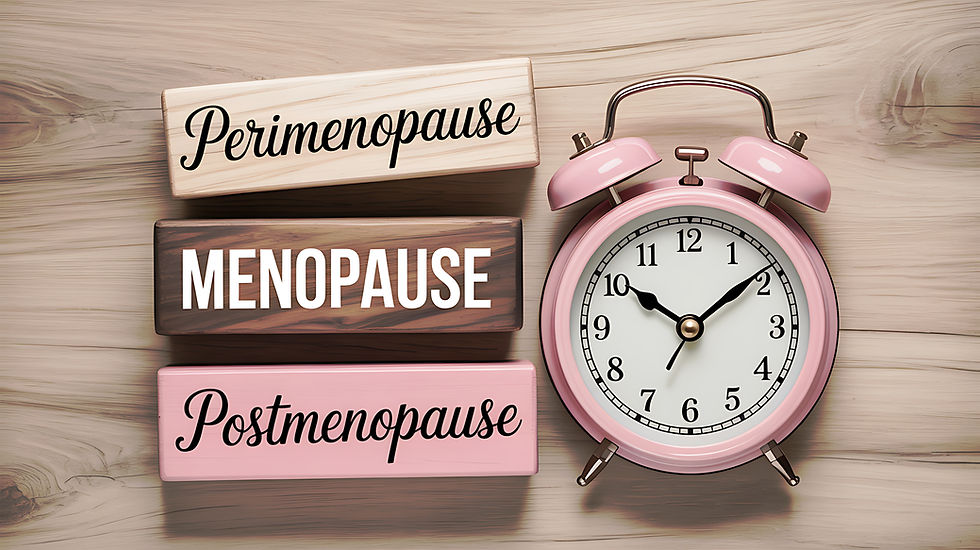
Many women expect menopause to begin with hot flushes and irregular periods. However, for many, the first signs of hormonal change are far more subtle and often much more disruptive.
If you're in your early, mid or late 40s and have noticed that you no longer feel like yourself, you are not alone. Many women describe feeling overwhelmed, emotionally exhausted, unable to concentrate, and struggling to cope with everyday life. Tasks that were once manageable suddenly feel impossible, and emotional reactions can seem out of proportion to the situation.
These symptoms are often dismissed as stress, a busy lifestyle, or simply "getting older." In reality, they may be the first signs of perimenopause.
What is perimenopause?
Perimenopause is the transition leading up to menopause, when the ovaries begin producing hormones less consistently. Hormone levels can fluctuate dramatically from one day to the next, leading to a wide variety of symptoms long before periods stop completely.
Importantly, you do not need to have hot flushes to be experiencing perimenopause.
Many women seek help months or even years after symptoms begin because neither they nor their healthcare professional initially consider hormonal changes as the cause.
Common symptoms include:
Feeling unusually overwhelmed or anxious
Difficulty concentrating or "brain fog"
Forgetfulness
Mood swings
Irritability or sudden anger ("rage")
Poor sleep
Fatigue
Reduced resilience to stress
Loss of confidence
Changes in menstrual pattern
Could it be PMS instead?
Women in their 40s can also experience worsening premenstrual syndrome (PMS). Distinguishing between PMS and perimenopause is important because the treatment approach may differ.
One of the simplest and most useful tools is a symptom diary.
If your symptoms consistently worsen in the days before your period and improve after menstruation or around ovulation, PMS may be the main cause.
If your symptoms occur throughout the month without a clear cyclical pattern, fluctuating hormones during perimenopause may be more likely.
Sometimes, both conditions can exist together.
Do I need hormone blood tests?
Many women request blood tests to see if they are "going through the menopause."
The answer depends on your age and menstrual pattern.
If you are in your 40s and still having periods, hormone blood tests are often not helpful. Hormone levels naturally fluctuate throughout perimenopause and a single blood test can appear completely normal despite significant symptoms.
Blood tests are more useful if there is concern about an early menopause (premature ovarian insufficiency), as this has important long-term implications for bone health and overall wellbeing.
It is also sensible to check for other conditions that can mimic hormonal symptoms, including:
Vitamin B12 deficiency
Folate deficiency
Magnesium deficiency
Thyroid disorders
Iron deficiency (where appropriate)
When should HRT be considered?
If your symptoms are affecting your quality of life, your blood tests are reassuring, and there is no clear cyclical pattern, Hormone Replacement Therapy (HRT) may be an appropriate option.
Every woman should have an individual assessment to discuss the benefits and any potential risks.
For most healthy women in their 40s, the risks associated with HRT are low. Before the age of 50, the increase in breast or ovarian cancer risk is minimal for most women, and many experience significant improvements in their quality of life.
Why I often recommend transdermal HRT
Where appropriate, I frequently recommend transdermal HRT, such as patches, gels or sprays.
This approach has several advantages:
It does not increase the risk of blood clots.
It is generally well tolerated.
It provides steady hormone absorption.
The dose can often be adjusted more easily to suit your individual needs.
Finding the right HRT is rarely a "one size fits all" process. It often requires careful review and adjustment.
If, after around three months, you have noticed little or no improvement, we may decide to alter the dose, change the preparation, or occasionally stop treatment altogether. The aim is always to find the option that works best for you.
Can HRT help with PMS?
Yes. For women whose symptoms are strongly linked to their menstrual cycle, HRT may help by reducing hormonal fluctuations and suppressing ovulation.
While it may not eliminate symptoms completely, many women find that it significantly reduces mood swings, irritability and emotional symptoms, making work, family life and everyday activities much more manageable.
How I can help
As both a Consultant Gynaecologist and Subspecialist in Reproductive medicine, I understand how frustrating it can be when you know something isn't right but your tests are "normal." I am a British Menopause Society member and adhere to their ethos and guidance, enabling women to later transfer their care to the NHS.
During your consultation, we'll take time to understand your symptoms, medical history and treatment goals. Together we can:
Determine whether your symptoms are due to perimenopause, PMS, or another underlying cause.
Arrange appropriate investigations where needed.
Discuss whether HRT is suitable for you.
Create a personalised treatment plan that fits your lifestyle and health needs.
Review your progress and adjust treatment until you feel like yourself again.
You don't have to simply put up with feeling overwhelmed, exhausted or unlike yourself. Effective treatments are available, and with the right support many women regain their confidence, energy and quality of life.
Ready to take the next step?
Reading trusted information is often the first step, but it can never replace advice that's tailored to your individual circumstances.
Whether you're looking for reassurance, have questions about your fertility or reproductive health, or are ready to arrange a consultation, we're here to help.
You can visit our website, explore our services, learn more about our team, or book a consultation to discuss your individual situation.
About Mrs Polly Ford
Mrs Polly Ford is a Consultant Gynaecologist and Subspecialist in Reproductive Medicine and Surgery, and founder of Fertility & Gynae. She is committed to providing compassionate, evidence-based care that helps patients understand their reproductive health and make informed decisions about their future.


Comments